• PAZHASSIRAJA COLLEGE

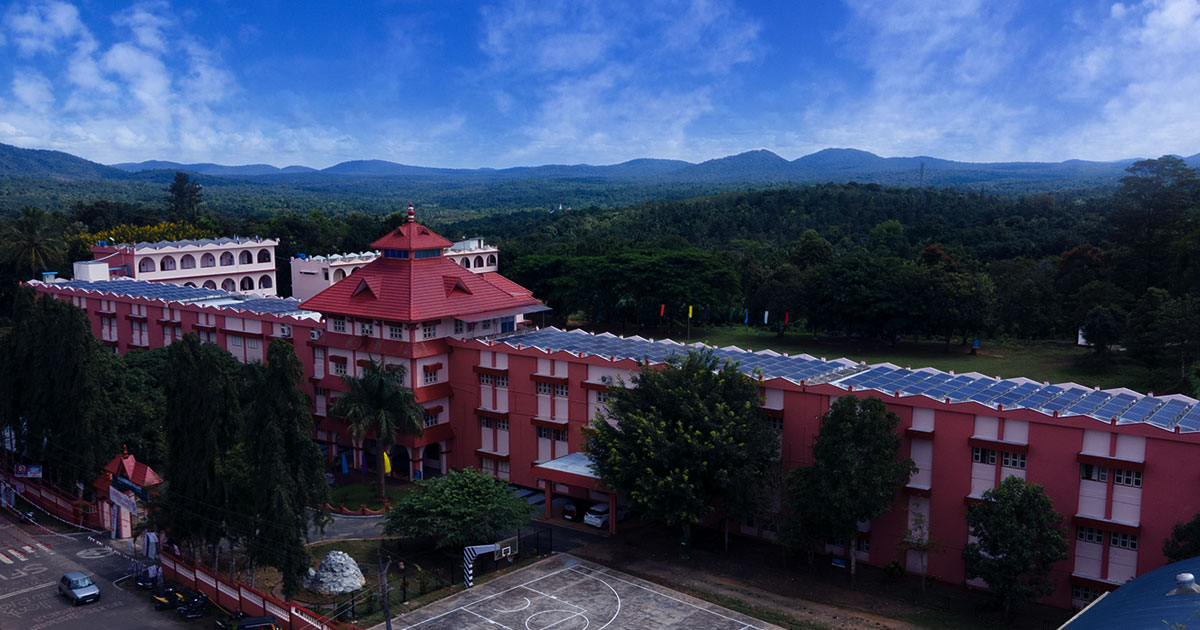
    Pazhassiraja College, Pulpally, Wayanad

    About Pazhassiraja College

    Pazhassiraja College was established in 1982 in the picturesque Wonderland of Wayanad District of Kerala, situated on the eastern slopes of the Western Ghats. The college is affiliated with the University of Calicut and was founded by the 'Pazhassiraja Education Society', which was formed to cater to the needs of the local people in higher education. The founder and manager of the college is the late T.U. Jacob, the then president of the society. The college began operations on October 20, 1982.

    Wayanad is a remotely situated tribal district in Kerala. The population includes mainly the settlers who migrated from the lowlands of Kerala and the native tribal people. Their main source of revenue is from agricultural produce such as pepper, coffee, paddy, etc., and the children of this highland did not have higher education facilities in the district until the first college was started here in 1964. The college had a humble beginning on October 20, 1982, with two pre-degree batches. The early days of the college were miserable. Fighting against all odds, the college started with only 127 students, 7 teachers, 8 office staff, and the first principal, Dr. O. Sooryanaryanan, who came from Government Brennen College, Thalassery. The society struggled a lot to get suitable land for this college, and finally, they bought this piece of land of about fifteen acres, just 1.5 kilometers away from the zero point of Pulpally.

    In July 1992, the management of Pazhassiraja College was transferred to the Malankara Catholic Diocese of Bathery. The fast development of the college owes much to the foresighted vision of the late Bishop Dr. Cyril Mar Baselios, the then manager and patron of the college, the first bishop of the diocese, and the first major archbishop and Catholicos of the Malankara Catholic Church. In 1995, His Excellency Dr. Geevarghese Mar Divannasios became the manager and patron of the college. In 2010, His Excellency Dr. Joseph Mar Thomas became the manager and patron of the college, and the college continues its cherished journey of higher education today under his able leadership and patronage. In 1992, the college acquired minority status by the rights of the minority community granted in the Indian Constitution.

    Though a minority institution, the college includes in its purview the educational aspirations of society as a whole, irrespective of religion, caste, gender, and social status. The institution seeks to foster equitable social development through the empowerment of individuals who can contribute to the common good. As a result, they become aware of their role in social reconstruction. The college tries to facilitate and encourage higher education among people who have been denied such opportunities because of socioeconomic backwardness.

    In 1990, the college was upgraded when the Government. of Kerala sanctioned the first undergraduate course in economics. Subsequently, other courses such as B.A. History (1993), B.A. Travel and Tourism Management (1995), BBA (1998), and B.Sc. Microbiology (1999). B.Sc. Biochemistry (2002), M.Sc.Microbiology (2002), Master of Travel & Tourism Management, B.A. Mass Communication (2005), B.A. English Literature (2013), M.Sc. Biochemistry (2013), MCJ (2013), M.A. Economics (2014), M.Com. (2014), B.Voc Food Science and B.Voc Agriculture (2018), and BA Econometrics and Data Management (2021) were sanctioned, and at present Pazhassiraja College is a first-grade college with eleven UG and six PG programs. In 2015, Pazhassiraja College was accredited with a B grade by the National Assessment and Accreditation Council (NAAC). In 2022, Pazhassiraja College was reaccredited with an A+ grade by the NAAC.


Available courses

Learning Objectives
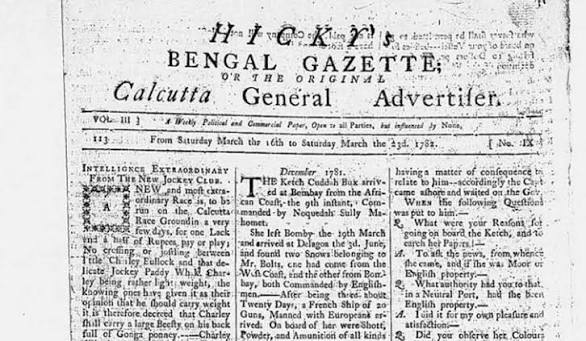
• To understand the origin and development of various media in India and in the West.
• To familiarise students with the different media organisations and its ownership.
• To understand the recent trends in media.

Learning Objectives
• To familiarise students with the basic concepts of communication, specifically mass communication as a human/social/cultural process.
• To introduce communication models as a method for studying communication in a disciplinary framework.
• To present mass media system as a cultural institution and an industry, with special reference to the Indian context.
• To acquaint students with key theories, theoreticians and schools of thought in communication, their historical evolution and influence on various social domains.

Learning Objectives

• To introduce key concepts, models and historical background of international/global communication.

• To present the impact of globalisation on the communication practices across national borders.

• To give an overview of global giants in mass media industry at global level and their impact

on local media cultures and social life.

• To present the key global aspects Indian media and entertainment industry

MTM2C07

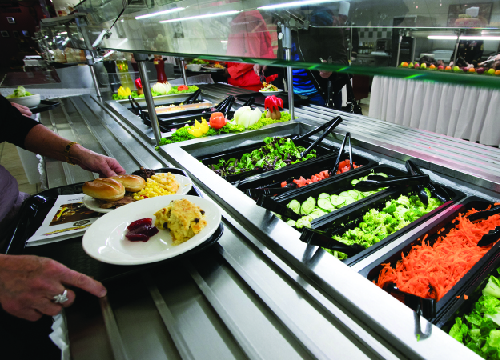
HOSPITALITY ADMINISTRATION


Objective:

This Module is prescribed to appraise students about the important departments of a hotel and to teach various aspects related to hospitality Industry.


Pedagogy: A combination of Lecture, Case Analysis, Group Discussion, Seminars, Assignments, Field visits, Industry visits, projects and assigned readings


Teaching Hours per Week:05                                                                                           Credits: 04


* Course Inputs *

Module –I Tourism & Accommodation-Introduction to hotels, Accommodation Industry, Types, Evolution of lodging industry, Need, Importance, role of hotels, FHRAI, Star Hotels and classification. International Scenarios and trends


Module -II Departments of a Hotel -Front Office Management- Introduction to Front Office Department, Advantages, Formalities and formats, Functions of front office Types of rooms and plans. Organization Chart, duties, responsibilities & Qualities of a front-office staff


Module III House Keeping – Introduction to Housekeeping, importance of housekeeping department, Organizational Chart and the duties and responsibilities. Cleaning- different equipments& agents, Daily routine systems, Laundry, Linen& Uniform, Interior Decoration & facilities, Special decorations,

Food & Beverage Service – Introducing to food & beverage Service, types of services, organizational charts and duties


Module IV Requirements and Procedure for Constructing Classified Hotel: Prescribed application form for approval of Hotel Projects. Regulatory conditions and Guide lines for approval of Hotel Projects, sources of Finance, Incentives and subsidy extended to Hotels in Tourist areas, and Tourist Backward areas.


Module V Resort Management- Resort Concept: Characteristics of Resort Management as opposed to Hotel Management, Resort planning: Preliminary Consideration in Resort Planning and Development and Phases of Resort Planning and Development. Trends and factors in Developed Tourist Markets leading to growth of Resort Concept, Factors affecting rate, Basic Elements of a Resort Complex: Loading facilities, landscaping, Dinning and drinking facilities, Family Oriented Services, shops and services, Entertainment; Use of Community Resources.


Module IV Hotel and Resort Marketing and Sales Promotion: Research and Analysis: The environment, current market, properly analysis, Market segmentation and potential guest markets, Tools of marketing, Advertising, Promotion and Publicity.


References:

1.         Anil Kumar and Shelji Mathew (2012). An Introduction to Hospitality, Kalyani Publishers, Jalandhar.

2.         Hoyle, Dorf & Jones (1995), Meaning conventions & Group business. Educational institute of AH & MA Vijay Dhawan, Food & Beverage Service

3.         Michael L Kasarana& Richard Brooks, Managing Front Office Operations –

4.         Sudhir Andrews, House Keeping Manual

5.         Dennis Foster, Introduction to Hospitality - I & II

6.         Event Management in leisure & tourism – David Watt

7.         Hotels and Tourism Part I and Part II – Dr. Chakrabothy.

8.         Hotels clarification and grading- Dr. Jagmohan Negi.

9.         Welcom to hospitality- Key- Sung- Chon and Raymond T sparrowe.


MTM4E06

ENVIRONMENT, ECOLOGY AND TOURISM


Objectives:

Objectives- A clean and hygienic environment is essential pre-requisite for tourist destination if it wants to promote and develop tourism.  The MTM students should understand the intimate relation environment and tourism.  This course explores the basic knowledge of environment and ecology, concept of carrying capacity, environmental problems such as changing climate, various types of pollution and global warming.  The students should know about outcomes of several environmental conferences held in India and UNO.  Now ecotourism is getting prime focus among all types of tourism.  

Pedagogy: Lectures, Group Discussion, Presentations, Practical, Case studies, Business Games.

Unit-I

Understanding various terms used in environment, e.g. environment, ecology, ecosystem, biodiversity hot spots, ecotourism.  Man, environment relationship in deference stages of development, Resources for ecotourism in India. Types of pollution such as air, water, land, noise, radio activity, visual etc., ozone depletion, greenhouse effect, global warming.  Impacts of these on tourism.

Unit-II

Concept of tourism carrying capacity: bio- physical, social, cultural.  Infrastructural methods to measure carrying capacity, Environment impact assessment.  Need for EIA measurement in tourism projects. 

Unit-III

Major tourism impacts of tourism on environment; air, water, land, sound, river, visual, appearance, coral reefs and mangroves, nature vegetation and wildlife.  Tourism impacts on cultural environment.

Unit-IV

Acts and Laws (of India) related with tourism and environment e.g. air, water, sound acts, wildlife, forest environment acts etc. Ecotourism policy of Govt. of India. World conference on environment e.g. Rio Summit, Kyoto Protocol, Bali Summit etc. outcome of these conferences.

References:

1.      Beaton, sue, Ecotourism: A Practical Guide for rural Communities; Landlines Press, Landon, 1988

2.      Wearing, Stephen, Ecotourism: Impacts, Potentials, and Possibility; Published by Butterwort-Heinemann, London, 1999

3.      Luck, Michael and Tourist Kirstges, Global Ecotourism Polices and Case Studies: Perspectives and Constraints ‘, Channel View Publications, London.2003

4.      Honey, Martha, Ecotourism and Certification: Setting Standards in Practice ‘, Island Press, London. 2002

5.      Kreg Lindberg, Donald E. Hawkins, Megan Epler Wood,’ Ecotourism: A Guide for Planners and Managers’, Ecotourism Society, Western London.1993

6.      Bulbeck, Chilla, ‘Facing the Wild: Ecotourism, Conservation and Animal Encounters,’ Earthscan, London. 2005.

7.      Sahu, C.’ Aspects of Tribal Studies, Sarup and Sons, New Delhi.2006

8.      Sharma, B.D and Tej Kumari, Indian Wildlife: Threats and Preservation ‘, Anmol Publications, New Delhi,2002

9.      Boniface, Brian G, and Chris Cooper, Worldwide Destinations: The Geography of Travel and Tourism Butterworth- Heinemann, London.2000

10.  Mishra, Archana. ‘Environmental Studies, Systems and Solutions,’ Selective and Scientific Books, New Delhi .2005

11.  Sharma, B.K., An Introduction to Environmental Laws’, Goel Publishing House, Meerut, 2001

12.  U.N Reports on Environmental Conference


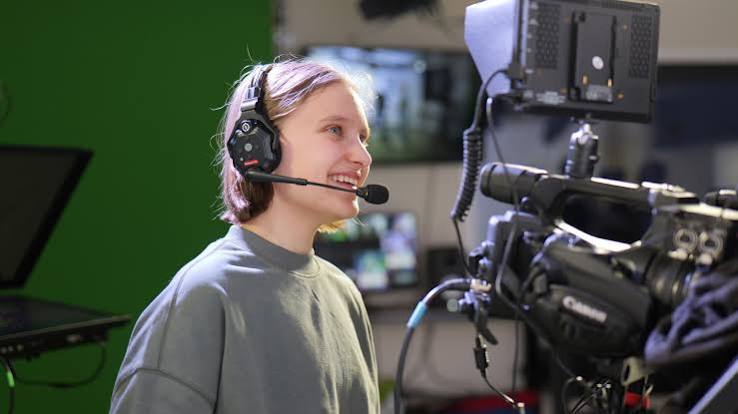
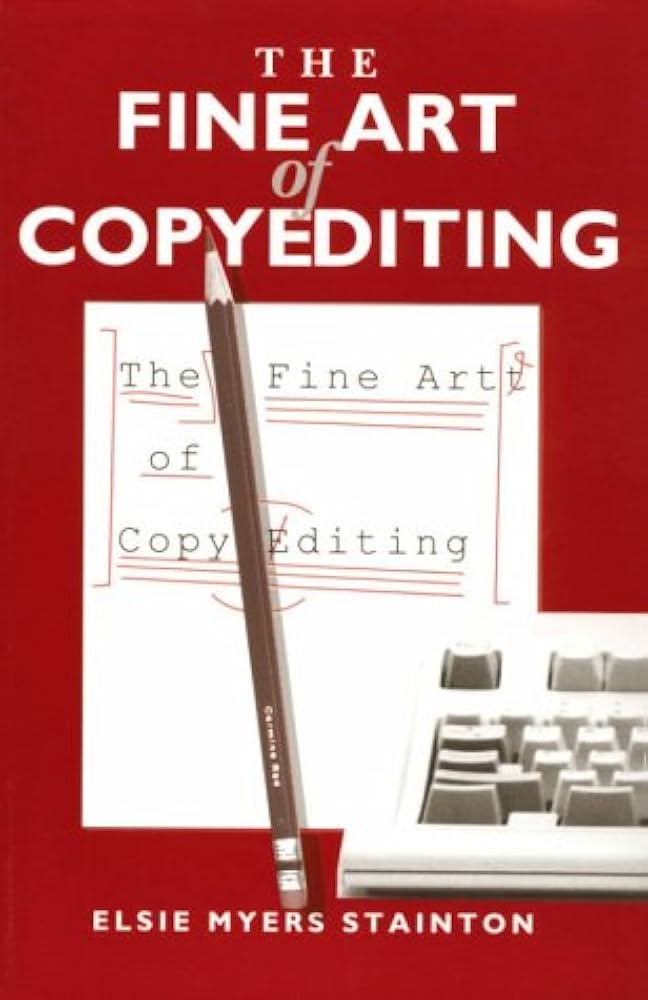
This course provides an in-depth examination of copy editing,encompassing its historical evolution to contemporary practices.Students apply this knowledge to journalism and different media formats, gaining proficiency in newsroom dynamics and diverse media formats. The course hones content design skills across media platforms and concludes with expertise in multi-platform story editing, ensuring that students emerge as versatile media editors.

This course is designed to provide students with a foundational understandingof communicationprinciples andpractices. Through a comprehensive exploration of communication processes, forms, and functions, studentswill develop essential skills applicable tovarious contexts.

The course provides enough understanding of computer fundamentals, MS Excel and SPSS. Students learn basic computing concepts, data entry, manipulation and analysis in Excel and statistical analysis techniques using SPSS.